How to prevent rodents from appearing in a restaurant
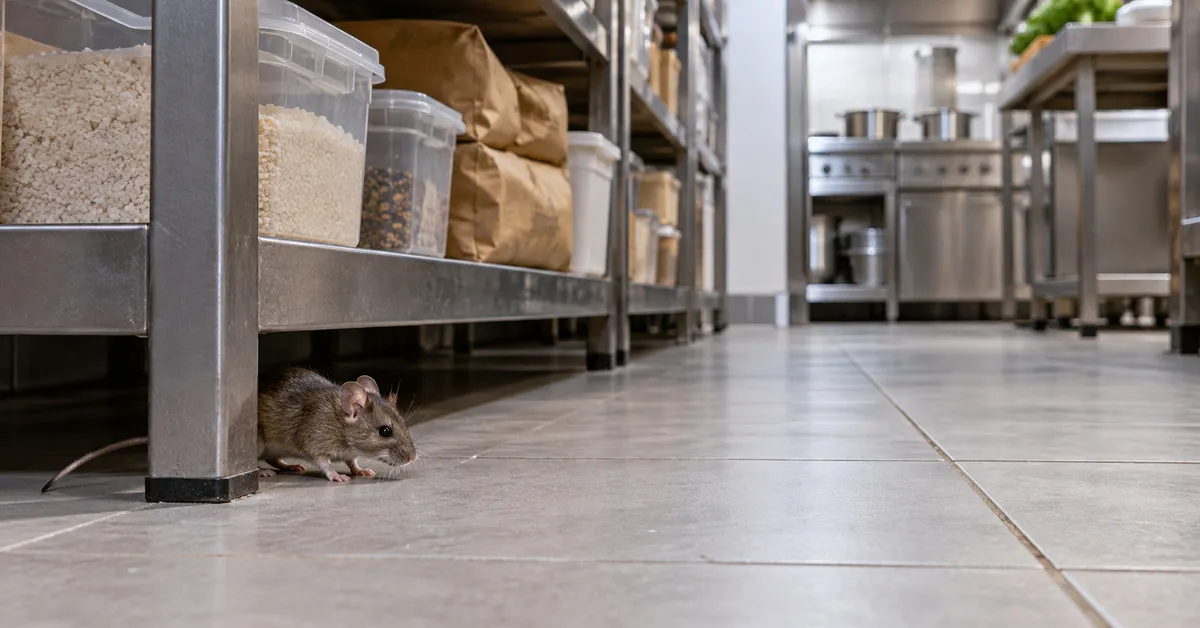
Protection against rodents in restaurants, bakeries, snack bars, and cafés should be established well before the first sighting. In this article, we review the daily tasks involved in prevention, the warning signs, and the role of the ultrasonic rodent repeller in defense.
Where can rodents enter the restaurant?
A back door left open during deliveries, a damaged threshold, or a gap around pipes can all provide entry points. Walk the route from the external waste storage area through the receiving point to the dry goods storage room. Also check the bottoms of doors, wall penetrations, and the area around equipment that is moved infrequently.
Seal gaps with a durable, chew-resistant solution; expanding foam alone is not a reliable barrier. If the door is regularly left open, you should also change the receiving procedure.
The building’s surroundings are also part of the task. For a restaurant operating in a shared courtyard, it is worth coordinating with neighboring businesses and the property manager about waste storage and any rodents that have been spotted. The source of a recurring problem may also be outside the premises.
Prevention lasts from receiving to closing.
At the time of receiving goods, check the integrity and cleanliness of the packaging. Refuse any goods that have been gnawed by rodents or contaminated with droppings. If you notice the problem only after receipt, isolate the affected item, prevent its use, and take action according to your receiving procedure.
Keep opened dry goods in a suitable, sealable, durable storage container. Leave space around shelves for inspection and cleaning. Regularly remove empty cardboard boxes and unused packaging materials to the designated storage area so they do not accumulate in the warehouse.
At closing time, crumbs under the worktops, leftover food around equipment, and waste should all be dealt with. The lids of waste bins should close properly, and the area around the outdoor storage should be kept clean.
Assign a responsible person to the tasks. For example, the closing shift should check the waste bins and the back door, while the opening shift should inspect the designated points in the storage area. A short inspection routine only works when it is clear who should be notified about any deviation and who will take action.
HACCP and pest control in Europe
Across Europe, Regulation (EC) No 852/2004 on food hygiene requires the operation of HACCP-based procedures and proper pest control. Keeping rodents away is part of good hygiene practice, on which the restaurant’s HACCP system is built. According to the NKFH operating guide, control should be carried out regularly, based on a planned program, and documented. Record the inspection schedule, the responsible persons, any findings, and the measures taken.
The Hungarian Food Chain Safety Office, or Nébih, GHP guide provides practical professional support for meeting the requirements. In addition to using the guide, the current legal requirements must also be taken into account.
What to Do When Signs of Rodents Are Detected
Droppings, fresh gnaw marks, scattered ingredients, or unusual nighttime noises all require investigation. Record the location and time, take a photo if possible, and notify the designated responsible person as well as the pest control specialist. The location of repeated sightings may help identify the entry route.
Isolate the food that is likely contaminated and prevent its use. Decide on any further use of the affected work area according to your food safety procedure. After the visible signs have been removed, the underlying cause must also be eliminated.
Do not sweep droppings up dry, and do not vacuum them. The CDC safe cleaning guide recommends gloves and wetting the area with disinfectant before removal. In a hospitality venue, follow the cleaning and disinfection instructions, along with the usage directions and contact time for the product suitable for the given surface.
The role of ultrasonic rodent repellers in hospitality
An ultrasonic rodent repeller may be considered as a supplementary tool, for example when protecting a dry goods storage room. It does not require placing poisoned bait to operate. However, its use should be planned with realistic expectations: there is limited independent evidence of the effectiveness of such devices when used as a standalone form of protection. Sealing entry points, maintaining hygiene, inspection, and the necessary professional measures remain essential.
Placement depends on the room’s layout. Ultrasound does not pass through walls, and hidden areas may remain behind densely packed shelves or stacks of boxes. Direct the device’s speakers toward the open, clearly visible area you want to protect. An device placed in a storage room cannot be expected to cover a prep area behind a closed door.
You can find more practical considerations in our guide to the proper placement of rodent repellers. Also make sure the device’s power supply is not accidentally cut off when closing up. Evaluate the results based on regular inspections: the appearance of new signs requires further action.
If you want to supplement your established protection with an ultrasonic device, take a look at the placement and power supply options for the Vadalarm rodent repeller. Adapt your choice to the layout of the rooms and the existing pest control plan.
Frequently asked questions
Can a mouse appear in a well-maintained restaurant too?
Yes. Cleaning reduces accessible food, but rodents can still get in through an open door or a structural gap in the building. Cleanliness should be addressed together with preventing entry and carrying out regular inspections.
Is one ultrasonic rodent repeller enough for the entire hospitality venue?
Rooms separated by walls and closed doors count as separate spaces. Placement should be planned room by room, based on the layout and the device’s user manual.
Are HACCP requirements met by installing a rodent repeller?
No. Installing a device on its own does not fulfill the pest control obligation. You must also ensure tailored prevention, regular inspections, necessary intervention, and documentation. Pest control is part of good hygiene practice, on which HACCP-based procedures are built.