Car marten repellent without complex electrical wiring
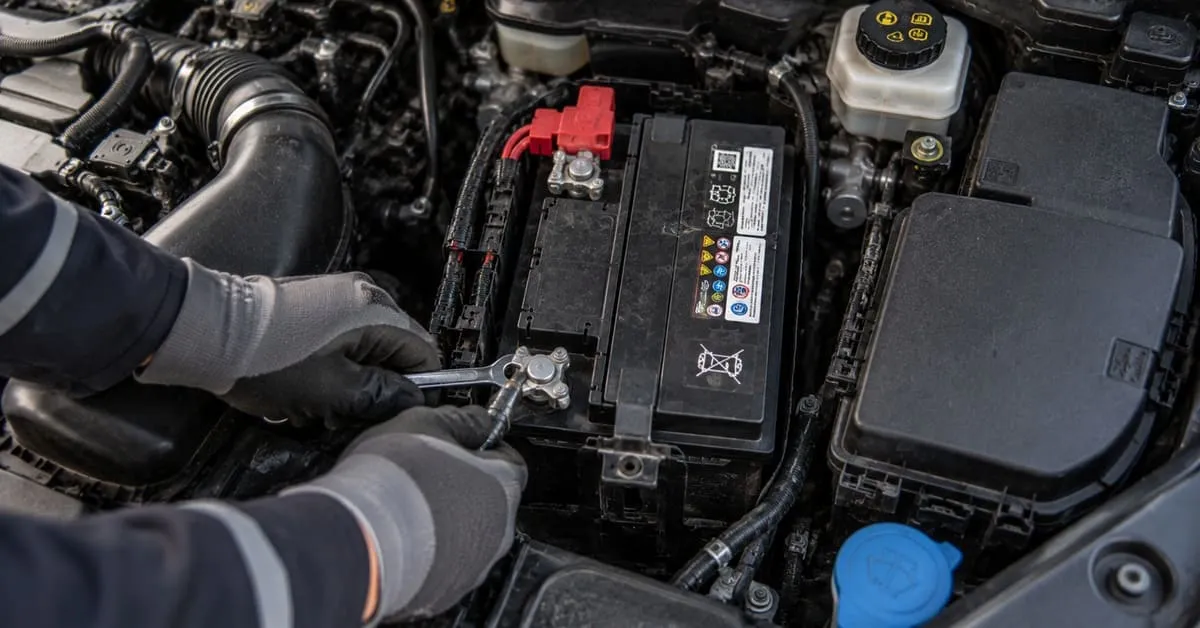
Installing a car marten repellent often means wiring it into the engine bay and connecting it to the car battery. This is no coincidence, because if you walk into an auto parts store or browse online, you will encounter almost only this kind of option. That is because the battery is a more expensive component, and most manufacturers avoid costly parts. Yet nowadays, there is a battery-powered solution for almost everything, so it is only fair to expect one for car rodent repellents as well. We have good news: we created the Vadalarm AutoGuard, which among other things comes with its own internal battery.
Why is a marten a problem in cars?
Martens have adapted surprisingly well to urban environments. They especially like to seek shelter in attics, garages, and the engine bays of cars. The latter can be particularly attractive to them, as it offers a protected hiding place that is difficult to access.
The problem begins when the animal chews through the wires, rubber hoses, or insulating materials in the engine bay. Even a single damaged cable can be enough to cause one of the car’s electrical systems to fail. In more serious cases, damage to the cooling system or other important components can also require major repairs.
Martens are also territorial animals. If they detect the scent marks of another marten in the engine bay, this can increase aggressive behavior and the risk of damage. That is why it is worth taking protective measures as soon as the first suspicious paw prints appear, or even before that.
How does a car marten repellent work?
One of the most common operating principles of modern car marten repellents is ultrasonic deterrence. These devices emit high-frequency sounds at or above the upper limit of human hearing. These are called ultrasounds.
The goal is to create an environment that is unpleasant for the animal, thereby reducing the chance that it will stay in the engine bay for long periods. However, there can be significant differences between devices. Some models operate at a constant frequency, while others continuously or randomly vary the frequency of the emitted sound. The purpose of the latter solution is to make it harder for animals to get used to it.
There are also marten repellents that use strong, flashing light in addition to ultrasound. By combining the two types of stimulus, they try to disturb the animal that dares to enter the engine bay through multiple senses. However, the effectiveness of ultrasonic deterrence is also influenced by the placement of the device, the design of the engine bay, and the animals’ behavior. The ultrasound can be shielded by components in the engine bay, so proper placement is especially important.
Why do traditional car marten repellents need to be wired in electrically?
A significant portion of traditional car marten repellents draw the power they need to operate from the vehicle’s 12-volt electrical system. This has an advantage: with proper design, the device can receive a continuous power supply, so it does not need to be recharged separately on a regular basis.
However, beyond the physical mounting, electrical connection can also involve additional tasks. We need access to the car battery or a suitable power supply point, and then connect the repellent securely. Some devices may also require additional wires to detect the ignition status.
In modern cars, the battery is often located in the trunk or somewhere in the passenger compartment. In such cases, wiring it through to the engine bay can already be a more serious task. Of course, it can also happen that the car’s electrical system must not be tampered with, usually for safety reasons, due to the manufacturer’s, service center’s, or owner’s guidelines.
Many people also worry that a continuously operating electrical device could drain the car’s battery during longer periods of parking. This can be an especially important consideration for vehicles that are used only rarely, and of course, with weaker batteries in winter it can be a real risk. Rodent and marten repellents with their own battery offer an alternative to these problems.
Battery-powered marten repellent: mounting in the engine bay without electrical wiring
One of the biggest advantages of marten repellents with a built-in battery is that their operation can be independent of the car’s electrical system. Such a device needs to be charged, securely mounted in the engine bay in the proper place, and then switched on. However, electrical connection to the car battery is not necessarily required.
This can be especially advantageous if the car is under warranty, leased, or if we simply do not want to interfere with the factory wiring. Another benefit of battery-powered operation is that the device can, if needed, be moved more easily from one vehicle to another, or even into the garage, since there is no need to modify the electrical connections as well.
Of course, this solution also has an important condition: the built-in battery must be charged from time to time. That is why it matters whether the marten repellent can operate for a few days, a few weeks, or even several months on a single charge.
Vadalarm AutoGuard: up to 3 months of operation without connecting to the car battery
The Vadalarm AutoGuard car marten and rodent repellent developed by Vadalarm was designed to offer a simple solution even for those who do not want to deal with the car’s electrical system. The device has a built-in battery with a capacity of 2800 mAh, which can be charged via a USB-C connector. In normal operating mode, it can run for up to three months on a single charge.
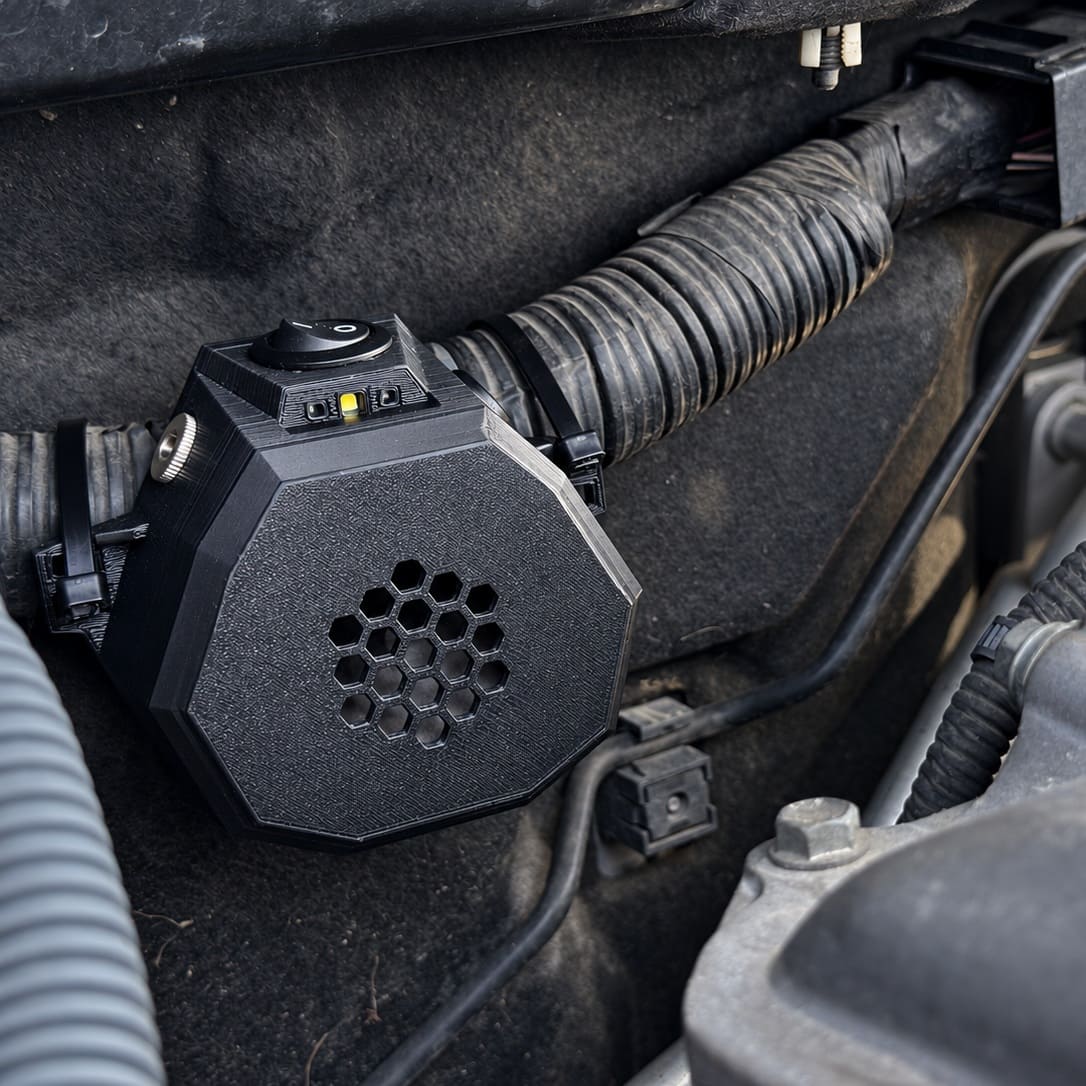
To start using it, the charged device must be securely mounted in the engine bay in the proper place, then switched on. It does not need to be connected to the car battery to operate, but it does have some advantages. The AutoGuard emits ultrasonic sound with a frequency that varies between 20 and 27 kHz, supplemented by a strong, flashing white LED. In normal operating mode, it emits a short alarm signal every five seconds.
Thanks to its long battery runtime, it can also be practical in cars that are used only rarely or whose battery is located in a hard-to-reach place. At the same time, it is important that the battery runtime is also affected by the ambient temperature. At temperatures below 10 °C for extended periods, the expected runtime in normal mode can drop to as little as one month.
What happens if we still connect it to the car battery?
One of the AutoGuard’s special features is that in addition to standalone battery operation, it can also be connected to the car’s electrical system. In that case, the device switches to automatic car turbo mode.
When the vehicle’s charging system is operating, the AutoGuard charges its own battery while the alarm is paused. After the vehicle is turned off and charging stops, the more intense ultrasonic and flashing light alarm is automatically activated after a three-minute delay.
A key advantage of this solution is that while parked, the AutoGuard already operates from its own battery. In this mode, it does not draw power from the vehicle’s battery. When we start driving again and the vehicle’s charging system becomes active, the device automatically switches off the alarm and starts recharging its built-in battery again. This means there is no need to manually switch the marten repellent on and off regularly during use.
Can a car marten repellent be used in a garage?
Martens do not necessarily avoid cars parked in garages either. This is especially true for garages that are open, or through which animals can easily get in. The Vadalarm AutoGuard can also be operated from a mains power adapter via its USB-C connector. In this case, it automatically switches to mains turbo mode, in which it uses a more intense ultrasonic and flashing light alarm.
In this mode, it emits ultrasound for one second every three seconds while the white LED flashes rapidly. Even so, its power consumption is less than 0.5 watts, so it will not significantly affect your electricity bill. This also makes it possible to place the device in the garage, opposite the car. Proper placement is important here as well, since ultrasound propagates most effectively directly, in an unobstructed space.
What should we pay attention to when installing a marten repellent?
Whether you choose a device that runs on its own battery or one connected to the car’s electrical system, the marten repellent must be securely mounted in the engine bay. Proper placement can fundamentally affect how effective the alarm is. The device should be installed in a place where the ultrasound encounters as few obstacles as possible and where the light signal can also be properly visible.
It is important that the repellent is mounted securely, does not come into contact with moving parts, and is not placed directly near particularly hot parts of the engine or exhaust system. If marten damage has occurred before, it is worth having the engine bay inspected, repairing any damaged components, and, if necessary, removing any remaining scent marks as well. The marten repellent is one of the tools of prevention, and it is best used together with proper maintenance and inspection of the engine bay.
Frequently asked questions about battery-powered car marten repellents
Does the battery-powered marten repellent also need to be installed in the engine bay?
Yes. A battery-powered marten repellent intended for the engine bay also needs to be properly secured in the car. The difference is that it does not need to be electrically connected to the car battery to operate.
Is an auto electrician needed to install the AutoGuard?
If you want to use the device on its own battery, electrical wiring is not necessary. With proper access, the correct mounting in the engine bay can be done without a specialist, as long as the installation instructions are followed.
Can the marten repellent drain the car battery?
This depends on the device’s design. In AutoGuard’s car turbo mode, it draws power from the vehicle’s electrical system only when the charging system is operating. While parked, it runs from its own battery.
How long does a battery-powered marten repellent work?
It depends on the device’s battery capacity, power consumption, operating mode, and temperature. The Vadalarm AutoGuard can operate for up to three months on a single charge in normal mode, but in prolonged cold weather the runtime may be shorter.
Does an ultrasonic marten repellent protect the entire car?
Ultrasonic devices mainly work where the sound waves actually reach the animal. The AutoGuard was designed to protect the engine bay, so it is possible that a marten may still climb onto the roof or hood of the car.
Can the Vadalarm AutoGuard also be used against other rodents?
Yes, the device was developed to keep martens and rodents away from the engine bay. However, the effectiveness of the deterrent may also depend on the animal species and the environmental conditions.
Protect your car before trouble strikes!
Damage in the engine bay caused by martens is inconvenient, and repairs can be costly. Today, there are prevention devices available that do not require any modification to the car’s electrical system.
The Vadalarm AutoGuard, with its own battery, variable-frequency, high-density ultrasonic and flashing light alarm, as well as its optional automatic car mode, offers a flexible solution for protecting the engine bay even if you do not want to interfere with the 12-volt system.
The device must be properly mounted in the engine bay just like other car marten repellents, but you are free to decide about the electrical wiring. If you would like to try an easy-to-use car rodent and marten repellent, learn more about the detailed operation of the Vadalarm AutoGuard on this page.