Rodent or marten in the car’s engine compartment: signs, damage, and prevention
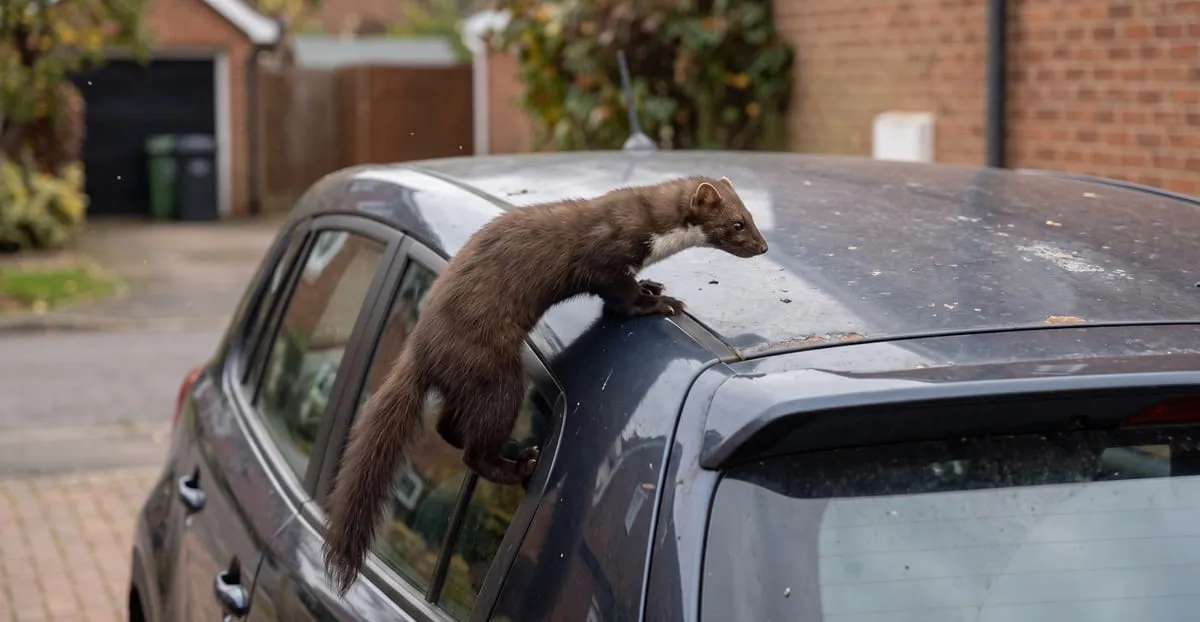
Chewed wires, torn insulation, or a few suspicious footprints on the hood: animals that appear in the car often leave traces before any warning light alerts you to the problem. A marten, mouse, or rat can cause serious damage in the engine compartment, so it is worth recognizing their presence in time.
Prevention starts with inspecting the car. Repairing the damage, removing scent traces, and a properly installed car alarm can together help reduce the risk of further damage.
Has a marten or rodent been in the car?
The marten belongs to the weasel family, while the mouse and rat are rodents. In the engine compartment, each of them can leave behind droppings, food remains, or damaged parts, but there are characteristic differences among the traces.
| Trace | May indicate a marten | May indicate a mouse or rat |
|---|---|---|
| Droppings | Long, often twisted, sometimes with fur or other food remains | Several small, dark droppings around hiding places and paths |
| Footprint | Five-toed paw print in dust or on the bodywork | Small footprints, sometimes with tail marks |
| Gathered material | Feathers, eggshells, or prey remains | Paper, leaves, fabric, and insulation gathered together as a nest |
| Food | Animal remains may also be present | Accumulated seeds, nuts, or pet food |
The size of the gnaw marks alone is not enough to identify the animal. Examining several types of traces together provides a more reliable clue. A marten can also move around the car in a way that leaves only paw prints behind for the time being.
Why is the engine compartment attractive to animals?
The engine compartment is a sheltered hiding place that can still be warm after a drive. In a car that is used infrequently, mice and rats can settle in for longer periods, especially if birdseed, pet food, or accessible waste is found near the parking spot.
In martens, territorial marking also plays a role in the damage caused. If the same car is parked regularly in different places, it may carry the scent traces of several animals. The scent of a rival can trigger biting in the engine compartment.
According to the summary of the German Insurance Association, GDV, in Germany, cable and pipe damage caused by martens is particularly common from April to June. However, it is worth maintaining protection all year round. gdv.de
What damage can they cause in the engine compartment?
The insulation on wires, rubber hoses, rubber bellows, and the sound and heat insulation under the hood can all be damaged. Rodents may also carry nesting material into the area around filters and other hard-to-reach cavities.
Even a small amount of damage can lead to a serious malfunction. A chewed wire can cause an electrical fault, and a punctured coolant hose can lead to fluid loss and overheating. Other types of damage may only become noticeable later, during use.
If the car starts with difficulty, runs unevenly, leaks fluid, shows a warning light, or you see a damaged wire, do not drive it without having it inspected.
What should you do if an animal has already been in the engine compartment?
- Take photos of the traces and the damage. This can be useful for the service center and in the event of an insurance claim as well.
- Have the car inspected. In addition to visible chewing damage, hidden wire or pipe damage may also be present.
- Have the affected parts repaired. Wrapping tape around a chewed wire does not replace a proper repair.
- Make sure the engine compartment is professionally cleaned. Removing the scent traces left behind by the marten is also important.
- Set up regular protection and checks. Even after the repair, keep an eye out for new traces.
The ADAC also recommends professional engine-compartment cleaning after a marten visit, because the scent mark of a foreign animal can trigger another bite.
Ultrasound and flashing light in engine-compartment protection
The purpose of an ultrasonic alarm is to make staying in the engine compartment unpleasant for the animal. Variable-frequency devices are also listed by ADAC among the technical solutions for car marten protection.
The Vadalarm AutoGuard car marten and rodent alarm uses variable-frequency ultrasound and flashing white light. The two types of signals are designed to scare away animals that dare to enter the engine compartment.
Proper placement is crucial: the engine block, covers, and insulating materials can block the ultrasound, and components can also obscure the light signal. That is why as much open space as possible should be left in front of the device.
Powered by its own battery or connected to the car
The Vadalarm AutoGuard has a built-in 2800 mAh battery, which can be charged via USB-C. In normal mode, under favorable conditions, it can run for up to 3 months on a single charge. In cold weather, operating time is shorter, so it is worth checking the charge more often.
For use with its own battery, you charge it, secure it safely in the engine compartment, and then switch on the device. It does not have to be connected to the car’s electrical system. This is also practical if the vehicle’s battery is located in the trunk or another hard-to-reach place.
The AutoGuard can also be connected to a 12 V vehicle battery with the included car connector. In car turbo mode, it charges its own battery while the vehicle’s charging system is running. When charging from the vehicle stops, the AutoGuard also stops charging, and after 3 minutes the alarm starts.
For the alarm, it draws power from its own battery at that time. When the vehicle’s charging system starts working again, the alarm switches off, and the device charges its internal battery again.
You can read more about the advantages of the battery-powered solution in our article about using a car marten alarm without electrical wiring.
Where should the marten alarm be placed in the engine compartment?
The device must be installed and securely fastened even without electrical wiring. Choose a point where it cannot shift while driving and where it does not touch any other part when the hood is closed.
The speaker and light signal should, if possible, face the routes used by the animals, as well as accessible cables and pipes. Behind a closed cover or under thick insulation, the signals have a harder time reaching where they are needed.
The device should be kept away from hot and moving parts: the turbo, exhaust, fan, and drive belts should be avoided. Choose a location protected from direct water exposure, and follow the temperature guidelines in the user manual. When connecting it in a car, the cable must also be secured safely.
If it is difficult to find a suitable place, ask for help with the installation. You can find further considerations in the installation guide for rodent repellents.
Cable Protection and Tidying Up the Parking Area
A vehicle-appropriate cable protection cover mounted on vulnerable wire sections is a useful additional safeguard. The service center can also help ensure that the cover fits properly and stays away from hot or moving parts.
The protection extends only to the sections that have actually been covered. Accessible hoses, rubber bellows, and insulation still require attention.
In the area around the parking spot, put away pet food and birdseed, remove accumulated waste, and check the car regularly if it is used infrequently. In a garage, it is also important to assess entry gaps and hiding places; we wrote about this in our guide to protecting garages against rodents.
Protection may also be needed for electric and hybrid cars
Martens and rodents can also appear in electric or hybrid cars. Inspection and repair of damaged high-voltage cables is the job of a specialized service center; do not touch the orange cables or their connectors.
The AutoGuard’s battery-powered use can also be advantageous in such a vehicle, because it does not require connection to the car’s electrical system. The appropriate mounting location and the option of a 12 V connection should always be chosen based on the design of the specific car.
You can also read more about the topic in our article on marten repellents for electric cars.
Protect Your Car’s Engine Compartment
If you have already found gnaw marks or nesting material, start with an inspection and professional cleaning. After that, take care of prevention and check the engine compartment again from time to time.
The Vadalarm AutoGuard offers a solution for different vehicle-use patterns thanks to its own battery, USB-C charging, and ultrasonic and flashing-light operation. You can use it on its own, or with the appropriate car connection in automatic turbo mode.
Check out the Vadalarm AutoGuard car marten and rodent alarm!
Frequently Asked Questions
Does the AutoGuard need to be connected to the car battery?
No, it is not required. The device also works from its own battery and can be charged via USB-C. In this case too, it must be securely fastened in the engine compartment.
Will the AutoGuard drain the car battery?
When connected in a car, it charges its own battery while the vehicle’s charging system is operating. After charging from the vehicle stops, it stops drawing power and uses its internal battery for the alarm.
Can the alarm still work if I find paw prints on the windshield?
Yes. The AutoGuard is designed to trigger an alarm in the engine compartment. Paw prints on the roof or windshield alone do not show what happened in the engine compartment. Also check for fresh gnaw marks and newly brought-in material.
Is it enough to place an alarm in the garage?
A device placed in the garage can help protect the space, but in a closed, compartmentalized engine bay, several obstacles can block the ultrasound. A device properly installed in the car sends the signals directly into the engine compartment.
Is it worth using an alarm even after cleaning the engine compartment?
Yes. Cleaning addresses dirt and earlier scent traces, while the alarm disturbs any animal that later ventures in. It is still worth keeping up regular inspections afterward.