Growing grapes is a complex task requiring a high level of expertise, and the results are plagued by a number of problems. In addition to frost damage, fungal and other infections, mites and moths, drought or excessive rainfall, many animals lurk in the vineyards to prey on what is valuable to them at various stages of development and harvesting.
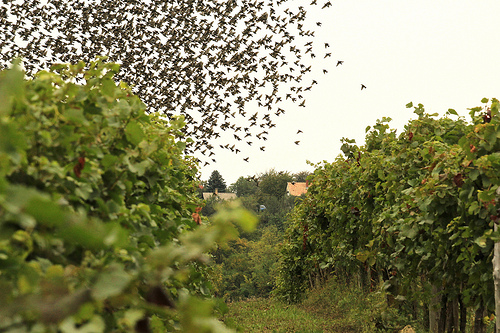
The most famous of these is the shag, but various species of thrush and pheasant also like the tasty, sweet fruit. Lesser sage grouse can be expected to be abundant in areas close to water-edge reeds, woodland with dense undergrowth or decoy woodland, i.e. areas with relatively dense bushes or tall grass. These fist-sized, glossy, black-plumaged, white-spotted birds live and move in large flocks.
The warbler can be a great help to farmers, as it eats large quantities of insects and worms and wagtails. Unfortunately, however, it also causes a lot of damage, so it cannot be seen as a clear beneficiary. It does not only cause damage by snapping off grapes. The many birds that fly together when they invade the vines may even crush more grapes than they consume. During tasting, many grapes are damaged by not being consumed, so that the grapes burst or mould and are then put into the press at harvest, thus degrading the quality of the must. Their droppings can also cause many problems.
There are several subspecies of the thrush family in our country, the best known being the black thrush, song thrush and pine thrush. The black thrush visits vineyards in smaller numbers and its movements are slower than those of the blackbird, so it causes damage mainly by snapping off grapes for food and pecking berries. The black thrush is not so demanding of its habitat and can be found in towns and cities, where it can nest in hedgerows and denser trees. In Hungary, the black thrush is protected, with an estimated value of 25,000 HUF.
Pheasants roost in areas bordered by woods and bushes, on the edges of populated areas and in vineyards and fields outside. These ground-nesting birds, with their clumsy movements and easily startled nature, are less likely to venture near humans. Pheasants are game birds.