Here are the 8 most common uses of ultrasound
You have probably not heard of the concept of ultrasound from us for the first time. Most people are familiar with its medical applications or recognize it from nature, but there are 7 other quite common areas where it might surprise you how incredibly helpful it is that we can now practically control the vibrations of very small surfaces at an atomic level, thereby emitting sounds at almost any frequency. Read our article and discover the most common applications of ultrasound!
The application of ultrasound, like many other things, was also inspired by nature. Although we do not know exactly which application was the first, it was undoubtedly the so-called echolocation, used by animals. In everyday language, this means sound-based localization. Since our hearing is relatively underdeveloped, it is hard for us to imagine that orientation can also be done by sound, but it is indeed possible. You can surely tell when a car is coming, even with your eyes closed, whether it is approaching from the front or the back, but you would have to be very courageous to navigate with your eyes closed solely based on your hearing.

You have probably also encountered the phenomenon that you hear yourself differently when speaking towards a curtain or a smooth white wall. This is often referred to as the room's acoustics. If you could speak at a high pitch that would already be considered ultrasound, and your hearing was good enough to detect the differences in echoes, you too would be capable of echolocation. Likely, only bats could explain better than this what it feels like to see the environment with their ears in complete darkness with their eyes closed.
What are ultrasounds?
As we touched upon in the previous section, ultrasound waves exceed the upper limit of human hearing, encompassing sound waves with frequencies greater than 20 kHz. To illustrate, one of the highest musical notes, C8, is produced by the piccolo, a wind instrument, but this only reaches 4186 Hz. Therefore, ultrasound technology begins at four times this frequency, utilizing these high-frequency sound waves for a variety of tasks such as cleaning, distance measurement, troubleshooting, welding, cutting, and also for medical purposes and animal deterrence. This technology has received significant time for development, as the first patents for ultrasound technology were issued in the early 20th century. Currently, numerous industries - automotive, manufacturing, electronics, medical technology, material testing - heavily rely on ultrasound applications. This is primarily due to the unique ability of ultrasounds to influence materials at the molecular level and reflect off surfaces.
Ultrasonic cleaning
Ultrasonic cleaning is a process that removes contaminants using ultrasound waves emitted into a liquid, without requiring strong chemicals or abrasive materials. This method can penetrate tiny crevices and openings that would be unreachable by other methods. It is particularly effective for cleaning delicate materials, such as plastic or smoothly polished metal surfaces, which could easily be damaged by scrubbing.

This technique has proven extremely useful in areas such as dentistry, medicine, optics, the automotive industry, and aviation, where complex and finely structured components need to be kept clean. Traditional cleaning methods often pose a risk of wear or can trigger harmful chemical reactions, while ultrasonic cleaning reaches places that cannot be effectively cleaned by other methods.
Crack detection and volumetric testing
Ultrasonic measuring devices can detect defects in metals and ceramics, such as pores, corrosion, cracks, and wear, by emitting frequency and examining their echoes. This method is used to inspect the internal structure of materials without causing damage, making it much gentler compared to traditional so-called destructive testing methods.
Ultrasonic technology is particularly important for the inspection of infrastructure elements such as bridges, where it is crucial for the structure to withstand applied weights without any risk of hidden defects. Additionally, it is applied to components of aircraft, where even the slightest crack or material flaw can have fatal consequences. Ultrasonic technology enables the detailed examination of these critical structural elements without the need to disassemble them, thus saving time and money while ensuring safe and continuous operation.
Ultrasonic distance measurement
Ultrasound technology is excellent for performing accurate distance or thickness measurements. This measurement method is based on emitting a predetermined ultrasonic frequency and measuring the time of reflection, which is similar to the echolocation used by animals. After the emitted ultrasound waves reflect, the elapsed time can be used to calculate the distance or thickness.
Ultrasonic distance measurement can be widely applied, for example, in robotics, proximity sensors, parking assistance systems, measuring liquid levels in tanks, and in the field of industrial automation. These applications leverage the ability of ultrasonic sensors to provide accurate measurement results regardless of environmental lighting conditions or the transparency of materials.

Ultrasonic sensors play a significant role, especially in parking assistance systems (reverse radar), where they help detect the distance behind vehicles. When the vehicle is put into reverse, the ultrasonic sensors emit waves, and by detecting their reflection, they determine the distance to obstacles behind them. This allows the driver to park safely without having the objects within their line of sight.
Additionally, the advantage of ultrasonic measurement technology is that it does not require expensive equipment, such as laser measuring devices, and it is not affected by color, transparency, or the presence of hard objects, as is the case with radar solutions. Therefore, ultrasound is often the most cost-effective solution for distance measurement, especially in industrial and automotive applications.
Ultrasonic welding
Ultrasonic welding is a modern and fast welding technique that uses high-frequency waves to heat and join the surfaces of two materials. In this process, the vibrations generated by ultrasound produce heat through the friction between the surfaces, allowing the materials to melt and fuse at the contact point on a molecular level.
This welding method is particularly useful for joining polymers and non-ferrous metals, such as aluminum or copper. The resulting weld seams are extremely precise and nearly invisible, which is advantageous in the manufacturing of automobiles, consumer electronics, and medical devices. Ultrasonic welding can be applied, for example, to connect electrical wires, safely package explosives, or fasten thin metal sheets.

The advantage of this technique is that it requires less heat and energy than traditional welding methods, thereby minimizing the risk of material deformation. Additionally, it provides stronger and more reliable joints than classic fastening and welding procedures, making ultrasonic welding an ideal choice where precision and reliability are crucial.
Ultrasonic cutting and punching
Ultrasound technology not only provides innovative solutions in the field of welding but also represents a significant advancement in precision cutting and punching. The method uses a special tool, known as a sonotrode, which acts as a vibrating "saw", capable of inducing vibrations at a molecular level with low friction and minimal force applied. As a result, the cutting is precise and clean, leaving no marks or residues on the surface.
This technique is particularly useful in the manufacturing of metals, glass, and ceramics, where precision and damage-free cutting are of paramount importance. Ultrasonic cutting and punching can also be applied in various other fields, including the textile industry, the production of printed circuit boards (PCBs), as well as in orthodontics and orthopedic surgery. In these applications, the advantage of ultrasound is that it minimizes cutting waste, ensuring high precision and efficiency without exerting high pressure on the material.
Ultrasound in medical diagnostics
Ultrasound technology is considered a fundamental tool in medical diagnostics, allowing for the examination of the body's internal structures and functions without the need for invasive procedures. Ultrasound devices emit high-frequency sound waves, which reflect off the body's tissues to create an image of the affected area. This procedure is widely used for monitoring pregnancy, assessing cardiovascular conditions, and examining the status of abdominal and other soft tissues. The advantage of ultrasound is that it does not use ionizing radiation, providing a safe alternative to other imaging techniques, such as X-rays or CT scans. Additionally, ultrasonic diagnostics offer real-time feedback, enabling physicians to immediately evaluate the results of the examination and intervene quickly if necessary.
Ultrasonic humidification
Ultrasonic humidification is an effective and energy-efficient method for increasing the moisture content of the air in homes, offices, and other enclosed spaces. This technology uses ultrasonic vibrations to emit small water droplets that immediately evaporate into the air, thereby increasing its humidity. Ultrasonic humidifiers are quiet, making them ideal for nighttime use, and they also require minimal maintenance.

This form of humidification is particularly useful in climates or seasons where the air is extremely dry, which can cause skin irritation, respiratory problems, and other health difficulties. Ultrasonic humidifiers are economical to operate, as they can effectively humidify with low energy consumption, thereby improving air quality and contributing to a comfortable and healthy home or workplace environment.
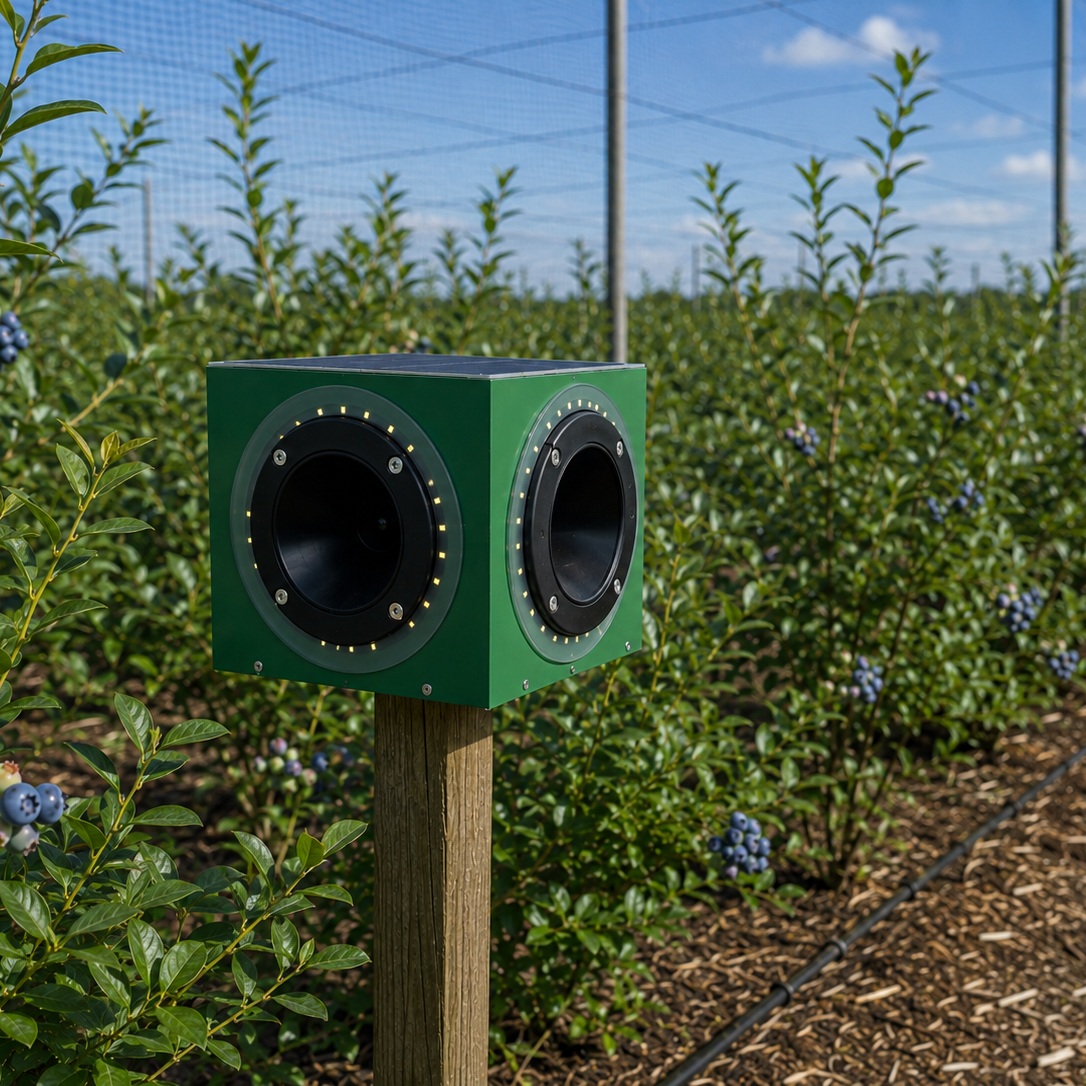
Ultrasonic animal deterrence
Ultrasonic animal deterrence is a modern solution designed to keep pests and unwanted animals away from homes, gardens, and agricultural areas. This technology is based on emitting ultrasonic sound waves that are so high in frequency that they are mostly inaudible to the human ear, yet unpleasant or disturbing to most animals. These sounds can effectively deter rodents and wildlife without causing them any harm.

The advantages of ultrasonic animal deterrents include non-toxic operation, which is particularly important in environments where the use of chemicals is undesirable or potentially hazardous. Furthermore, these devices are energy-efficient and easy to install, allowing users to effectively protect their areas from unwanted animal intrusions. Ultrasonic deterrents are available in various sizes and designs, so everyone can find a model suited to their needs, whether for small garden areas or larger agricultural fields. If you're looking for solutions to deter wildlife or rodents, check out the rodent deterrents and game deterrents developed by us!