No matter how much you love summer and good weather, by now you're probably fed up with the heat. We are neither meteorologists nor doctors, so we won't offer any more advice than to stay in the shade or a cool place if you can. However, we might be able to tell you a bit more about animals living outside. Read on if you're curious about how extreme heat affects wildlife and, of course, the damage they cause.
The physiological effects of heat naturally affect not only us humans. In fact, as incredible as it may seem, we are less burdened by it than animals. This is because our evolutionary advantage includes having one of the best thermoregulation systems on Earth. Our sweat glands are present in such large numbers that they are unmatched. In contrast, wild boars, deer, roe deer, and rabbits are unable to sweat because they do not have any sweat glands.
**Animal Methods for Regulating Body Heat**
The lack of sweating ability has forced every animal to develop its own method of heat dissipation. For example, dogs pant in the heat, releasing excess heat through their mouths instead of sweating. As a result, they cannot live in places where the average temperature exceeds their body temperature.
Rabbits use their large ears to regulate their body heat. Their enormous ears not only serve good hearing but also help in cooling, essentially acting as small radiators that radiate heat. Additionally, they cool off in their underground burrows (similar to voles), taking advantage of the lower ground temperatures.
Wild boars have a characteristic survival strategy: wallowing. This is essentially a less cultured form of swimming. If possible, they prefer standing water, but during a heatwave, only mud remains, which can still be life-saving for them.

Deer and roe deer adopt more general methods for survival. If they can, they escape the heat by going into water or at least into the shade. They try to move as little as possible to avoid generating unnecessary heat. By increasing their breathing rate, they pant like dogs, and, as is true for all living beings, they increase their fluid intake.
Plants as Water Sources
Although it may seem contradictory at first, that plants are drier during a drought, there are a few factors why wildlife also target the moisture found in plants. More resilient plants, such as succulents, retain moisture well even during droughts, making them a primary target. Root vegetables (carrots, potatoes), which can retain moisture better underground, also become prime targets.
Plants, of course, not only contain water but also serve as a food source for wildlife. While they eat less due to less movement, they still get hungry occasionally, and it is practical to consume food that contains water.
A very clever trick is that animals particularly time their feeding to the night, as the dew that condenses during the cooler weather collects on the leaves, significantly increasing the moisture content of the consumed plants.
Additionally, it is worth considering that no matter how much we think we know our environment, we often realize that wildlife knows it even better. They are aware of where in a forest the soil is more hydrated, and they will graze in the wetter areas. It goes without saying that they easily get used to irrigated plants without hesitation. Therefore, watering your plants can be a double-edged sword.
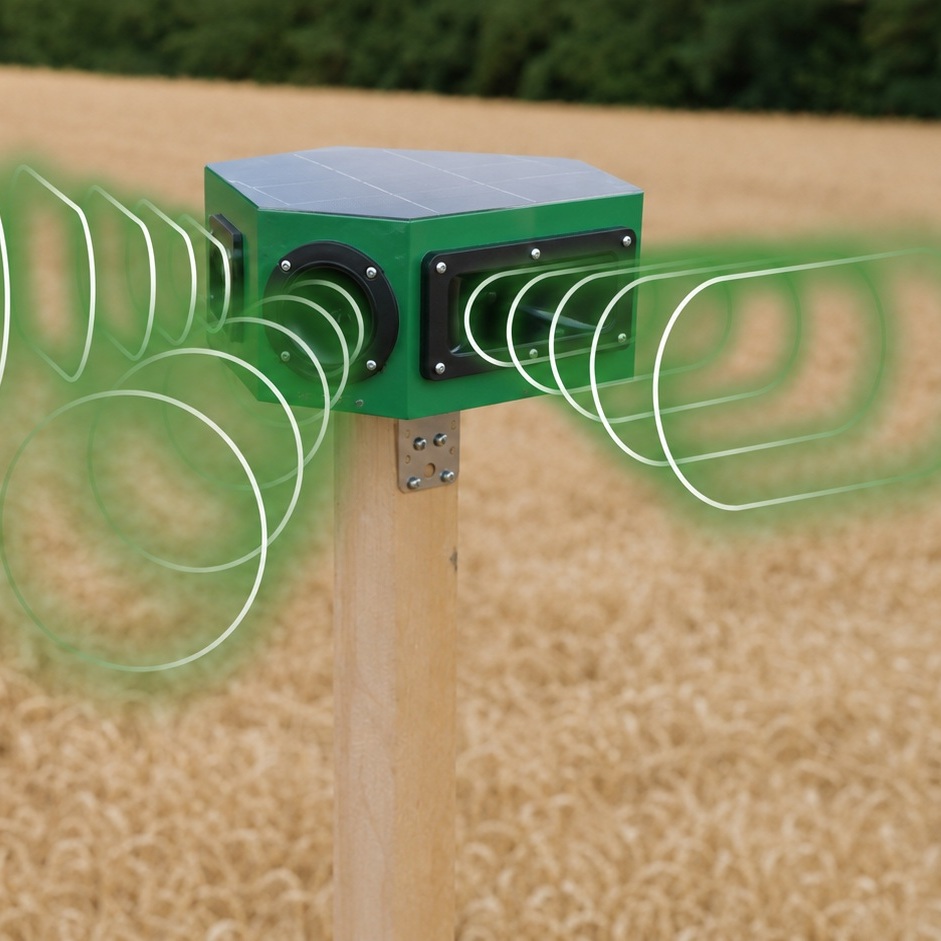
Although we always try to offer a solution at the end of our articles – after all, that is our job – this time, we can't offer much good news. Our wildlife repellent solutions and electric fences significantly reduce the damage caused by wildlife even during such times. However, you must accept the fact that in such hot weather, animals have to choose between two options: either they face things they don't like (ultrasound, smell, electric current, etc.), or they die of thirst. Which would you choose in their place?