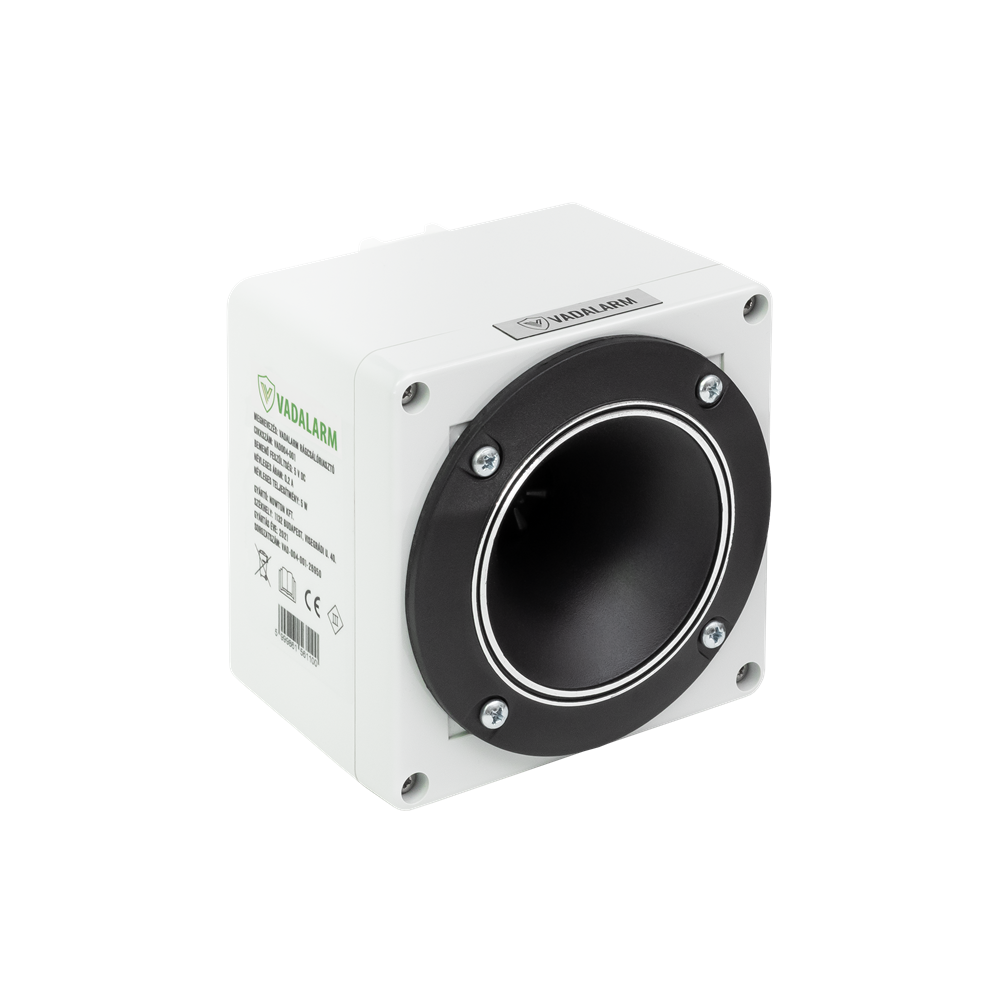
I'm sure there are common misconceptions in your profession that could send you up a wall. This is no different in one of our specialities, acoustic animal repellers. Especially as the internet is full of articles written for your benefit, promising you anything about ultrasonic rodent repellers, for example, just to get you to buy the product. Then, when the truth comes out, you find that the company, registered in Cyprus or even in a Slovenian port, will not only not compensate you, but will not even refund the price of the product.
But we do not deny that we are writing this article out of interest. But our interest as a domestic manufacturer and as a company with physical access is different. We want to make sure that you only buy our products if it makes sense. Therefore, we would like to dispel three of the most common misconceptions about ultrasound and ultrasonic animal repellers.
"Ultrasound goes through walls"
Let's be quick: there are certainly thin walls that it can go through, but they are closer in thickness to toilet paper than bricks. Think about it in common sense, ultrasound (as its name suggests) is a sound. And the higher the sound, the harder it is to get through anything. For example, if you live in a condominium, you'll hear your neighbour drumming before you'll hear him sing. This is because drumming is low frequency. Ultrasound, on the other hand, with its range of over 20kHz, is clearly the other extreme, which is quickly absorbed into the wall. So we cannot help someone who cannot put their rodent repellent in the room where the rodents are. So only buy an ultrasonic animal alarm if you can place it in the same airspace as the animal.
"Ultrasound repels birds, crickets, mosquitoes and even cockroaches."
Ultrasound is often portrayed as a technology that repels everything. Believe me, we'd be happiest if this were true, because if it were, we wouldn't need to develop clever solutions to provide multi-functional, sound-changing and clever animal repellers for more animals. While there are indeed many animals with partial hearing in the 20 to 30 kHz range, most of them are not. Cats and dogs can also hear in this range, but our own tests have shown that this can vary greatly from breed to breed, so we cannot recommend our products for them at this stage. Birds, on the other hand, have a similar (but in most cases worse) hearing range than humans. This means that, like us, they cannot hear ultrasound. That's why we are developing different acoustic solutions for them, which work on a different principle.
"Ultrasound is harmful and dangerous"
Many people think the same about transformers at the end of the street, or even 5G towers. But the fact is that none of these have been shown to contribute to the development of any disease. In fact! Ultrasound is one of the most widely used technologies in medical diagnostics. It can examine almost every part of your body, from your toes to your ears. Think about it logically again: if it were harmful (to humans or animals), do you think it would be used to test pregnant women?
Beware the fallacy, be critical
Of course, the list could be extended by many more items, but basically, these are the three misconceptions our clients most often have. We hope that by refuting them in a scientific and common-sense way, we've managed to convince you that ultrasound technology has its place, but it's not all-powerful. And that's where the advertising comes in: if, and only if, you feel we can help you with the above, CLICK HERE FOR RODENT PROBLEMS, CLICK HERE FOR WILD, BIRD PROBLEMS, and we will help you as best we can.
And finally, a word of advice: keep your eyes open and always be a little sceptical if something you see from afar seems too good to be true!